What have I learned lately?
I have learned about hybridization, I have leanred more specific qualities and properties of the three main types of compounds (ionic, covalent and metallic).
What have I done lately?
I have gotten sick and taken notes. My life is just flush with activity.
What do I hope to do?
Finish getting caught up on things i missed due to my wisdom teeth. Find time to just marinate in laziness. Take up scuba diving. Introduce folk dance to the community. And pass the test coming up on Monday so that I can keep my grade at at least a C so come April I can go to a Cage the Elephant concert.
Friday, February 21, 2014

Monday, February 17, 2014
Classification of solids
...Labs are fun!
Anyway, the most recent lab, Classification of Solids, meant burning innocent test tubes- I mean melting the substances inside the test tubes!- seeing if they were soluble, and seeing if they could conduct electricity. The questions related to this lab were mostly interpreting the results and actual questions relating to the knowledge acquired during the lab.
I suppose I should answer those.
An ionic solid would be soluble in water and conduct electricity in the melt, a network solid would be soluble in organic solvents, a metal would conduct electricity when under pressure (or at just about any other time), and a molecular solid would be slightly soluble in water and slightly conductive in said solution. If a solid was white at room temp, melted at 80 degrees Celsius and the melt had slight electrical conductivity it would be an ionic solid because it is presumably crystalline and conducts electricity. If a white solid melted at 1000 degrees Celsius and was insoluble in all solvents, and didn't conduct electricity at all, it would be an inorganic network solid. Potassium is a metal, Calcium Carbonate is an inorganic network solid, Octane is a molecular solid, and Hydrogen Chloride is a molecular solid as well. Speaking generally, metals are insoluble in water, network solids are ductile and malleable, and about anything but molecular solids are nonvolatile. A test that didn't work well in this lab was the melting portion of the lab because there wasn't enough fire. But really, the lab was very well produced all-around. If I had one complaint, it would be the substances chosen. Some portions there was little to no variety and in others there were no defining factors between substances, even when just looking at them (cobalt chloride excluded).
Night y'all!
Anyway, the most recent lab, Classification of Solids, meant burning innocent test tubes- I mean melting the substances inside the test tubes!- seeing if they were soluble, and seeing if they could conduct electricity. The questions related to this lab were mostly interpreting the results and actual questions relating to the knowledge acquired during the lab.
I suppose I should answer those.
An ionic solid would be soluble in water and conduct electricity in the melt, a network solid would be soluble in organic solvents, a metal would conduct electricity when under pressure (or at just about any other time), and a molecular solid would be slightly soluble in water and slightly conductive in said solution. If a solid was white at room temp, melted at 80 degrees Celsius and the melt had slight electrical conductivity it would be an ionic solid because it is presumably crystalline and conducts electricity. If a white solid melted at 1000 degrees Celsius and was insoluble in all solvents, and didn't conduct electricity at all, it would be an inorganic network solid. Potassium is a metal, Calcium Carbonate is an inorganic network solid, Octane is a molecular solid, and Hydrogen Chloride is a molecular solid as well. Speaking generally, metals are insoluble in water, network solids are ductile and malleable, and about anything but molecular solids are nonvolatile. A test that didn't work well in this lab was the melting portion of the lab because there wasn't enough fire. But really, the lab was very well produced all-around. If I had one complaint, it would be the substances chosen. Some portions there was little to no variety and in others there were no defining factors between substances, even when just looking at them (cobalt chloride excluded).
Night y'all!
Wednesday, January 29, 2014
Soap is repulsive...
When mixed with water and pepper anyway...
So, what I'm basically saying is that soap spreads on the surface of the water due to the fact that it has both polar and nonpolar poles. This pushes the pepper to the edges. Observe below:
BEHOLD!
So yeah soap is repulsive to pepper. When it's just water and soap, the soap gently floats to the bottom of the cup and then mixes in of sorts.

So, what I'm basically saying is that soap spreads on the surface of the water due to the fact that it has both polar and nonpolar poles. This pushes the pepper to the edges. Observe below:
So yeah soap is repulsive to pepper. When it's just water and soap, the soap gently floats to the bottom of the cup and then mixes in of sorts.
The yellow tint around the edges is the soap.
Sunday, January 26, 2014
Three Questions: The Sequel of the sequel of the sequel of the sequel to the Nth power
What have I done or learned lately? *Inhales deeply for long exposition* ....I got nothin. I could say I learned I'm horrible at taking tests, and that I love Celtic music, but I kind of knew that before. I have been working with the theater on stuff for the Beauty and the Beast musical (performances are in Mid-March, more details on the way) but, being cast as the wardrobe, I just stand there and recite lines with my arms at uncomfortable angles. Honestly, I can hardly even walk in the darn costume. Oh and I'm too tall for it, which means I crouch over more than the Hunchback of Notre Dame.
What am I going to do? Go to the library sometime in the near future and return books. Teach myself how to play the bagpipes and figure skate simultaneously. Take over the world. Finish test corrections and do online Government assignments. And hopefully not spontaneously combust.
Have a nice day everybody!
What am I going to do? Go to the library sometime in the near future and return books. Teach myself how to play the bagpipes and figure skate simultaneously. Take over the world. Finish test corrections and do online Government assignments. And hopefully not spontaneously combust.
Have a nice day everybody!
Monday, January 20, 2014
GRAS: Generally Regarded as Satirical
I kid, I kid. GRAS stands for "Generally Regarded as Safe."
On an absolutely unrelated note which will in no way connect to anything later, there are seven basic food dyes: FD&C Blue No. 1 & 2 (Brilliant Blue FCF and Indigotine), FD&C Green No. 3 (Fast Green FCF), FD&C Red No. 40 & 3 (Allura Red AC and Erythrosine), FD&C Yellow No. 5 & 6 (Tartazine and Sunset Yellow FCF), and Chanel No. 05 (Aubazine).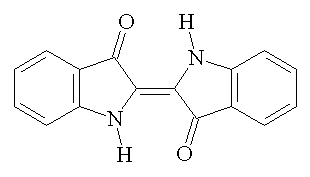 |
| FD&C Blue No. 2 from www.chm.bris.ac.uk |
 |
| FD&C Blue No. 1 from medicinescomplete.com |
 |
| FD&C Green No. 3 from wikipedia |

 |
| FD&C Red No. 40, also from wikipedia |

 |
| FD&C Red No. 3, again from wikipedia |
 |
| FD&C Yellow No. 5... from (all together now,) wikipedia |
 |
| FD&C Yellow No. 6, from thearubigin.blogspot.com for a change. |
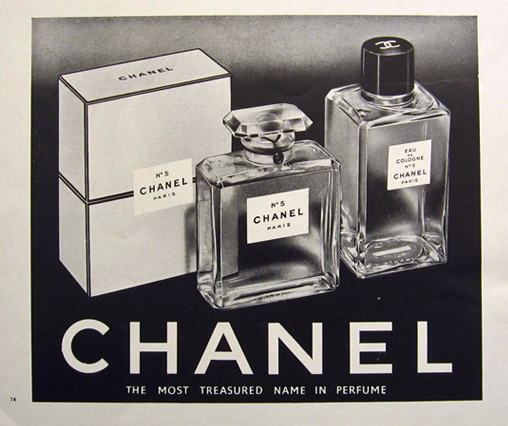 |
| Chanel No. 5 from smithandbrandon.wordpress.com because I could. Also Aubazine is a convent where Coco Chanel lived in her teenage years with nuns. |
Wednesday, November 13, 2013
Combined 3 questions lab... so... 6 questions lab?
10/4/13:
11/1/13:
Three questions about the past few weeks.
Well, theater has been sucking what little life I have left, between Fright Fest, Nora's Lost, and Farmington one act festival (state champs yay sleepy time now). Reading Crime and Punishment in AP Lit has been interesting, if a little hard to follow occasionally. French is... french. C'est bien, mais ca n'est pas facile ("It's good, but it isn't easy" for the non-polyglots out there). The Common Application for colleges has been kicking my glutes every which way, and I still fail to see how the year my mom graduated is relevant.
What have I learned recently? Arabic, I suppose. And chemistry stuff, but that bit's obvious. I've been a bit too busy to retain anything lately, but one-act is over, so that should tone down a bit. Theoretically.
What do I plan to do now? Catch up on my rest when I'm not in my French class (desolee, Madame). Still working on balancing life and school, especially in the creative area. I haven't heard the click of keyboard as I type out cheesy stories at one A.M. enough lately. I miss posting cringe-worthy fanfiction on the internet. [insert overly dramatized sigh here].
- What did we do this week?
- What did we learn?
- What are we going to do?
11/1/13:
Three questions about the past few weeks.
Well, theater has been sucking what little life I have left, between Fright Fest, Nora's Lost, and Farmington one act festival (state champs yay sleepy time now). Reading Crime and Punishment in AP Lit has been interesting, if a little hard to follow occasionally. French is... french. C'est bien, mais ca n'est pas facile ("It's good, but it isn't easy" for the non-polyglots out there). The Common Application for colleges has been kicking my glutes every which way, and I still fail to see how the year my mom graduated is relevant.
What have I learned recently? Arabic, I suppose. And chemistry stuff, but that bit's obvious. I've been a bit too busy to retain anything lately, but one-act is over, so that should tone down a bit. Theoretically.
What do I plan to do now? Catch up on my rest when I'm not in my French class (desolee, Madame). Still working on balancing life and school, especially in the creative area. I haven't heard the click of keyboard as I type out cheesy stories at one A.M. enough lately. I miss posting cringe-worthy fanfiction on the internet. [insert overly dramatized sigh here].
Monday, November 4, 2013
Really Late Sticky Situation Lab
Yeah this was due last Friday. I swear I will smack my forehead with some form of heavy book later. Right now I need all my brain cells to do this blog. So, without further ado, A Sticky Situation, The Blog.
Solubility: Basically how easily something breaks down and is absorbed into another substance.
Solvation: The ionic attraction of molecules (while in a solvent) to other molecules.
Intermolecular forces are the forces of attraction and repulsion betwixt molecules, as indicated by the "inter-" in the name.
IMFs affect solvation because they decide the strength between molecules, similar to how they affect the boiling point of various chemicals.
"Like dissolves like" is used to explain differences in solubility because, to be brief, solutions will dissolve solutions with similar structures.
Solubility: Basically how easily something breaks down and is absorbed into another substance.
Solvation: The ionic attraction of molecules (while in a solvent) to other molecules.
Intermolecular forces are the forces of attraction and repulsion betwixt molecules, as indicated by the "inter-" in the name.
IMFs affect solvation because they decide the strength between molecules, similar to how they affect the boiling point of various chemicals.
"Like dissolves like" is used to explain differences in solubility because, to be brief, solutions will dissolve solutions with similar structures.
Subscribe to:
Posts (Atom)